SECTORS OF JOURNALIsM SAFETY
Jump to your section:

Safety matters
Journalist safety matters because the press cannot effectively inform the public if they are exposed to preventable physical, digital, legal, emotional, or reputational harm. Protecting journalists helps safeguard independent newsgathering, ensuring that critical stories are reported accurately, ethically, and without undue fear or interference.

Reporting with Resilience provides real-world tools and case studies to help journalists prepare for, withstand, and recover from the risks of their work.
CONNECT
Sectors
Sectors of Journalism Safety
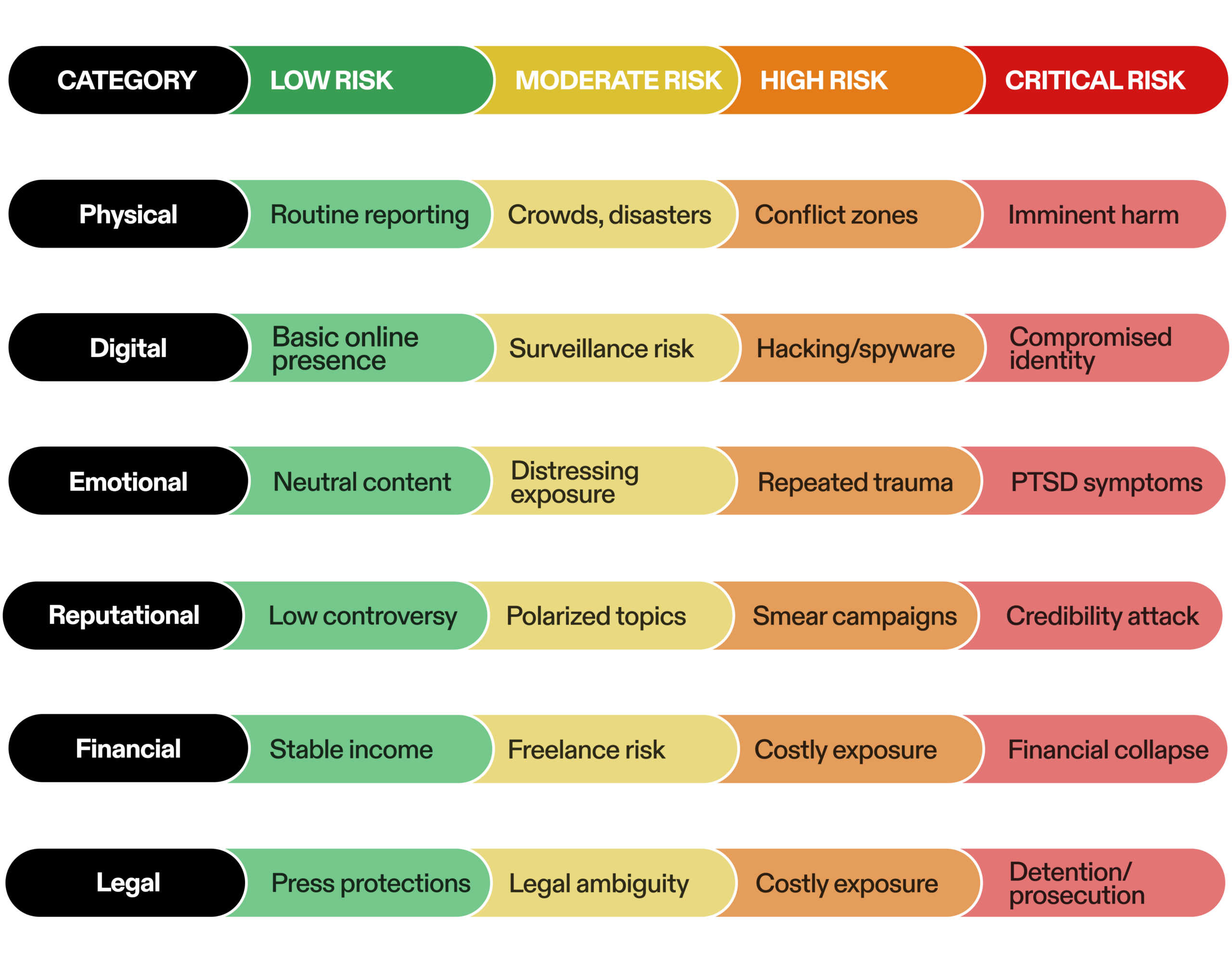
Journalism safety extends far beyond physical protection and requires attention to interconnected risks across physical, digital, emotional, reputational, financial, and legal domains. A comprehensive approach recognizes that threats in one area—such as online harassment, legal intimidation, or financial pressure—can directly affect a journalist’s ability to work safely, ethically, and effectively.
Risk Assessment Process
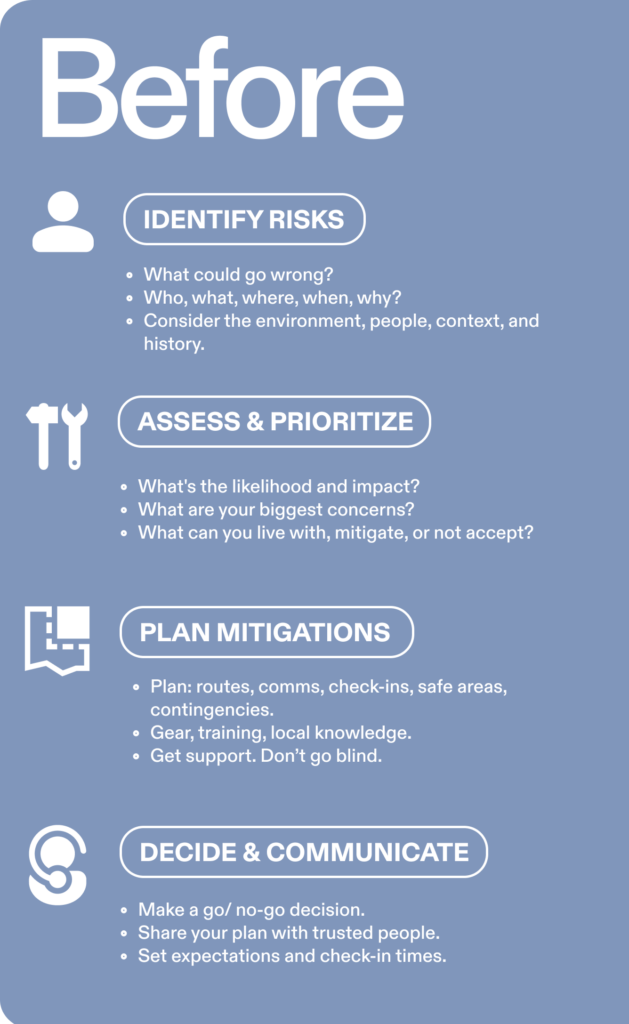
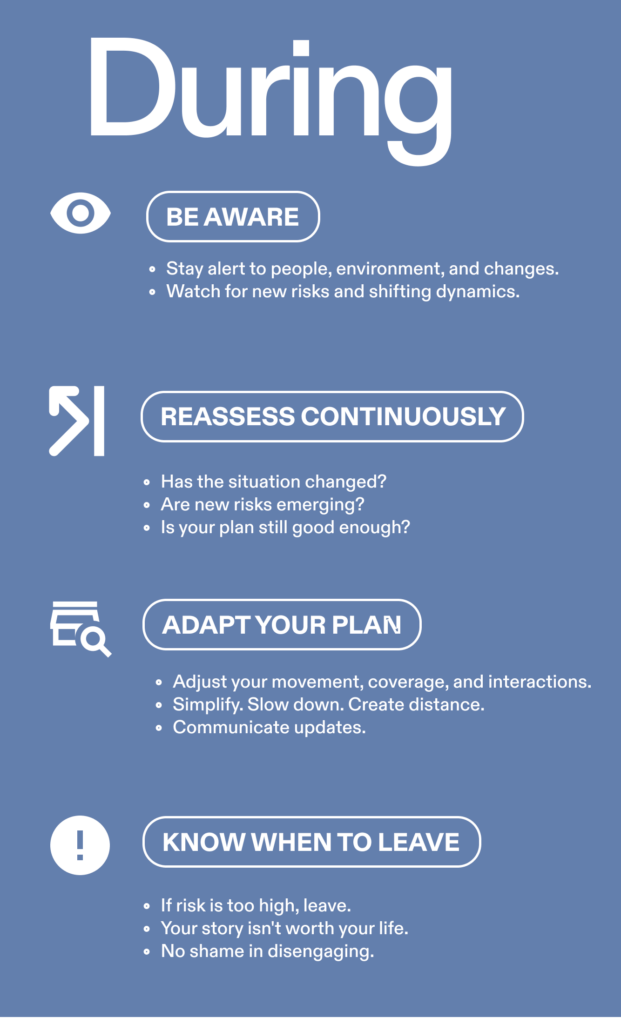
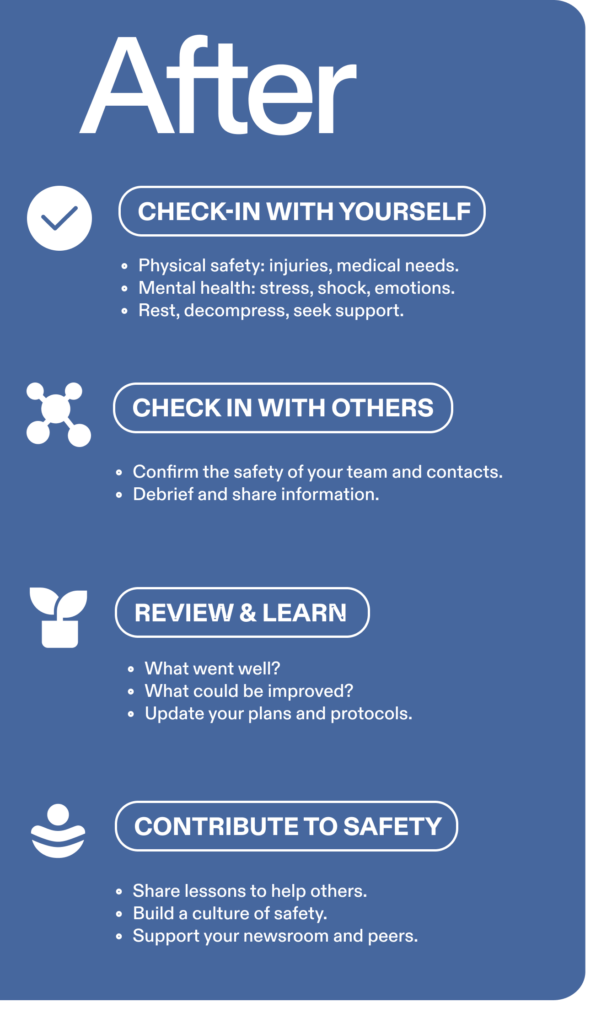
Staying safe means protecting yourself across all dimensions of your work and life.
Physical
Your body and personal security
Examples
- Covering protests or demonstrations
- Traveling to high-crime neighborhoods
- Threats, harassment, or physical assault
- Natural disasters and extreme weather
- On-the-road reporting and traffic risks
Protect Yourself
Assess risks, trust your instincts, use safety plans, and don’t go alone.
Emotional
Your mental health and well-being.
Examples
- Witnessing violence, trauma, or tragedy
- Stress from tight deadlines and workload
- Online abuse and hateful comments
- Burnout, compassion fatigue, vicarious trauma
- Isolation while reporting in the field
Check In With Yourself
Acknowledge stress, take breaks, and seek support. It’s okay to ask for help.
Financial
Your financial stability and resources.
Examples
- Low pay and unstable freelance income
- Unpaid or late payments
- Covering story costs out of pocket
- Loss of equipment or property
- Lawsuits and financial intimidation (SLAPPs)
Plan and Protect
Understand contracts, save for emergencies, insure equipment, and track expenses.
Digital
Your devices, data, and online safety.
Examples
- Hacking, phishing, and malware
- Doxing and online harassment
- Data breaches and surveillance
- Unsafe Wi-Fi and unsecured devices
- Leaks of sources or unpublished work
Be Smart Online
Use strong passwords, secure devices, verify links, and protect your data.
Reputational
Your credibility and professional image.
Examples
- Being labeled “biased” or “fake news”
- Online smear campaigns and disinformation
- Misrepresentation of your reporting
- Mistakes that damage credibility
- Association with controversial topics
Protect Your Credibility
Report ethically, verify facts, be transparent, and correct errors.
Legal
Your rights, responsibilities, and protections.
Examples
- Arrests or detention while reporting
- Subpoenas and court appearances
- Shield law issues and source protection
- Defamation claims and legal threats
- Access to records and public information
Protect Yourself
Understand laws, carry press credentials, and consult legal resources when needed.
Journalist Safety Risk Matrix