

About
About Reporting with resilience
Designed for small newsrooms, freelancers, and student newsrooms, Reporting with Resilience provides real-world tools and case studies to help journalists prepare for, withstand, and recover from the risks of their work.
What is reporting with resilience?
RwR fills critical gaps in existing safety resources, offering tailored guidance, practical support, and actionable tools for those who may be left out of the broader safety conversations.
Topics include covering mass casualty events or immigration-related situations, addressing core safety elements such as: risk assessment, situational awareness, trauma and mental health strategies, field preparedness, and crisis response planning.
Designed as a user-tested model, RwR delivers on-the-go access, flexible self-pacing, an interactive interface, real-world case scenarios, and levels of support not always available through other sources.
Importantly, Reporting with Resilience also acknowledges and celebrates the vital work of other safety agencies in this realm. We are honored to collaborate with such committed partners, linking to their materials to amplify their reach.
1
why safety?
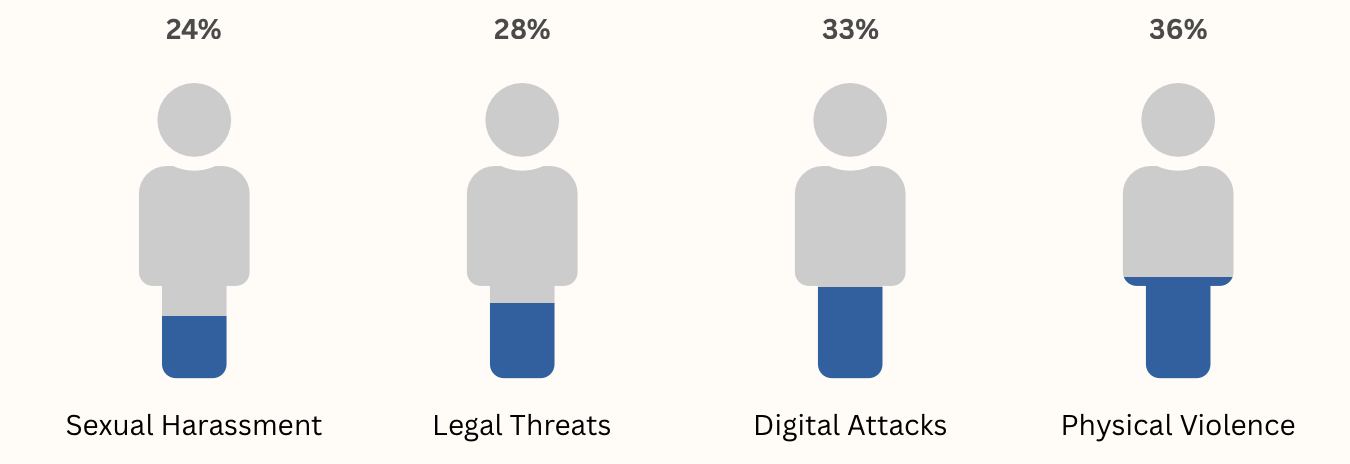
In 2024, U.S. journalists were arrested at least 48 times—more than the previous two years combined (Freedom of the Press). In the same year, a national safety survey found 36% of American journalists had faced or been threatened with physical violence while working; 33% reported digital attacks; 28% endured legal threats; and 24% were victims of sexual harassment (IWMF).
Equally striking: during the June 2025 Los Angeles protests, over two dozen journalists were arrested or roughed up by law enforcement; press freedom groups logged at least 35 documented attacks, 30 by police, resulting in 20 injuries (RSF via AP). Meanwhile, in more generalized terms, approximately 300 journalists were assaulted in the U.S. in 2020, predominantly by law enforcement, and at least 110 were arrested in connection to their reporting (CPJ). More recently, per a CPJ–tracker report, as of September 2024, the number of assaults related to reporting rose by over 50% (see also V.O.A.)
Online, the threats are just as real. About 42% of U.S. journalists report job-related harassment or threats from outside sources—mostly on social media. Nearly half of these involve threats of physical harm, followed by sexual harassment, racial or ethnic abuse, and doxing (Pew Research Center). Women journalists bear a disproportionate burden: one study found 79% of U.S. women journalists believe online harassment harms press freedom, prompting many to self-censor or avoid certain topics (First Monday). Notably, a 2018 study revealed that 63% of U.S. women media workers had faced online threats or harassment at least once (PEN America).
2
WHy center emotional well-being?
All of the threats referenced above, as well as many others not delineated here, take a mental health toll. Recent reports reflect the consequences of this for members of the press.
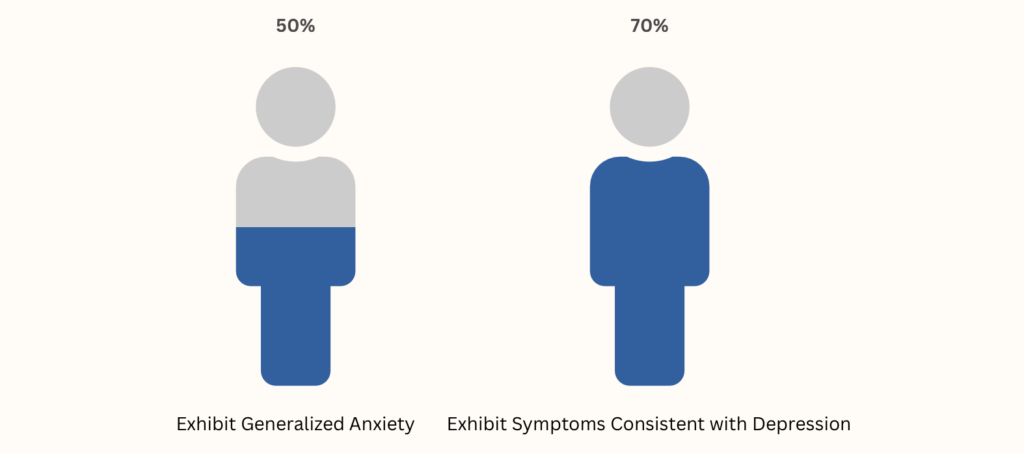
One such report reveals that close to 70% of journalists exhibit symptoms consistent with depression while nearing 50% exhibit generalized anxiety (Journalists’ Experiences of Online Harassment: Anxiety, Depression, and Posttraumatic Stress). Meanwhile, the Media Resilience Network found that 80% of journalists experience chronic stress or burnout. Many other studies note that covering conflict, suffering, violation and/or devastation has led to alarming levels of anxiety and PTSD. The 24/7 pace of work, lack of resources, audience hostility, and the pressure to be plugged in at all times only exacerbates the mental health tolls.
The risks are remarkably severe for freelancers, student journalists, and small newsrooms—those without significant institutional safety nets. RwR aims to support these journalist populations, because when these voices are silenced, entire communities lose critical coverage.
3
Who are we?
The James W. Foley Legacy Foundation advocates for the freedom of Americans held hostage or wrongfully detained abroad, promotes the safety of journalists worldwide, and Inspires moral courage one person at a time.
The John S. and James L. Knight Foundation champions a more effective democracy by investing in quality journalism, advancing media innovation, engaging communities, and fostering the arts.

4
attributions
Dr. Lauren walsh

Lauren Walsh, PhD, is the creator and lead developer of Reporting with Resilience, bringing extensive expertise in journalism safety, photojournalism ethics, trauma-aware reporting, and the emotional and psychological risks journalists face. She has developed the initiative’s framework, research, resources, training materials, and practical guidance, drawing on years of teaching, research, field experience, and work with journalists and news organizations. Through Reporting with Resilience, Walsh has brought together this expertise to create a practical, accessible resource designed to help U.S.-based journalists and newsrooms understand, prepare for, and respond to the physical, digital, legal, reputational, and financial risks of reporting, with a core emphasis on the psychological risks and mitigations.
Dr. Thomas Durkin
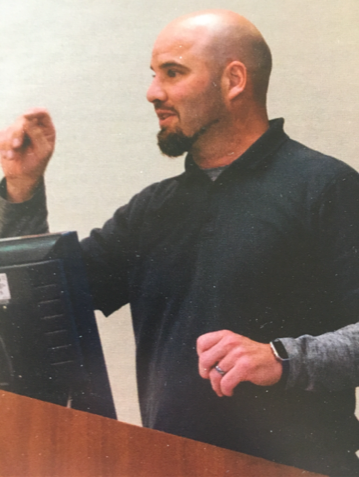
Reporting with Resilience has been overseen by Dr. Thomas Durkin, the Director of Safety Education with the James W. Foley Legacy Foundation. Durkin also serves as Research and Grant Coordinator for Marquette University’s Center for Peacemaking and as an instructor in Marquette’s Klingler College of Arts & Sciences. Durkin’s dissertation, The Games Men Play: Madness and Masculinity in Post-World War II American Fiction, 1946-1964, examines the relationship between madness and the social construction of masculinity in the period following World War II. While in graduate school, Durkin spent nearly three years as a freelance journalist for a local newspaper, covering culture and community events. Despite hands-on newsroom experience, he does not recall safety—physical, mental, or otherwise—being addressed in a deliberate or substantive way. Durkin was a long-time friend of journalist James Foley.
additional support
Clinicians who support this project include: TK
Legal oversight of aspects of Reporting with Resilience has been provided by Reporters for Lawyers.
Design & web
Graphic design and website design by Zoe Scourtes.
IT consultation and configuration by Fernando Colina, Board Member of the James W. Foley Legacy Foundation.
Contact
For any inquiries or further information about Reporting with Resilience, please feel free to contact us.
Contact
inquiries
newsletter
Stay Connected!