Perceived Identity and Risk as a Non-US citizen
Jump to your section:
Misidentification | Higher Risk | Practical Implications | Psychological Dimension
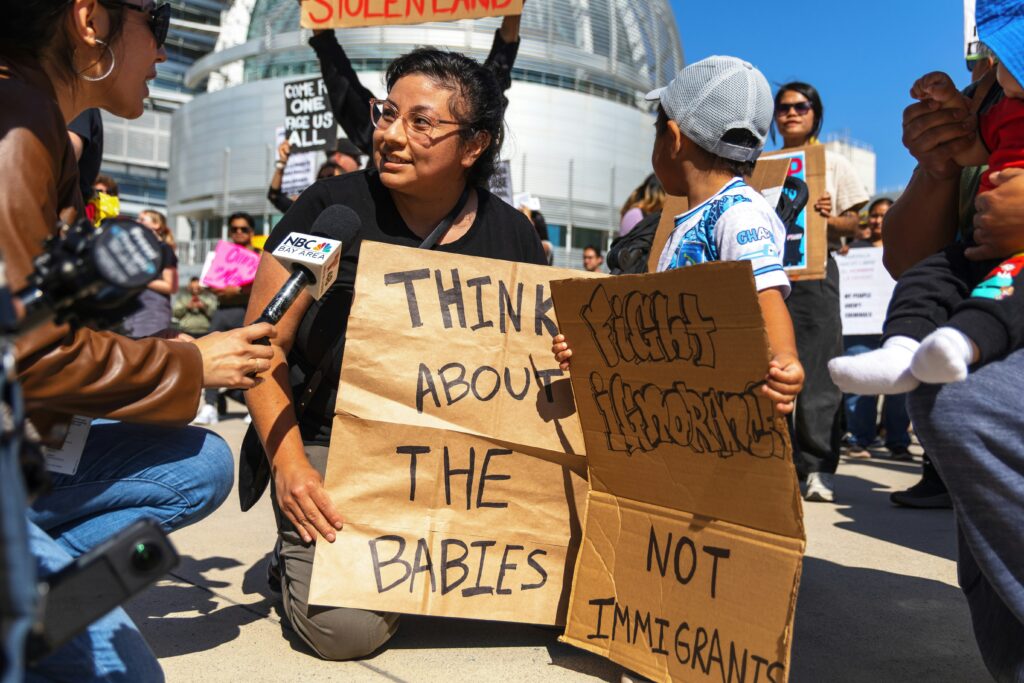
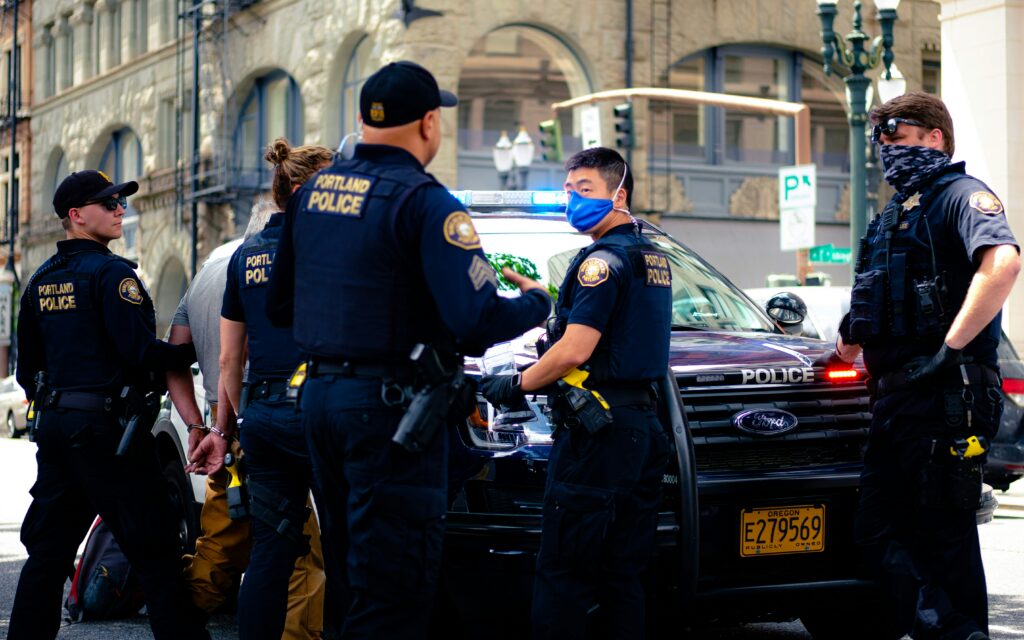
In ICE operations, border zones, and even immigration court surroundings, law enforcement is often operating under heightened suspicion, speed, and ambiguity. Decisions are made quickly, and individuals are sorted into categories—officer, journalist, bystander, subject—based on visual and behavioral cues, not formal status.
For non-U.S. citizen journalists, several factors can collapse that distinction:
Language: Speaking Spanish, Haitian Creole, Arabic, etc. with community members can signal “affiliation” rather than reporting. Note: There is nothing wrong with speaking a foreign language; this resource focuses on how this impacts your perceived identity and therefore influences your risk.
Accent: Even when speaking English, an accent may trigger assumptions about immigration status.
Ethnic or racial profiling: Appearance alone may align a journalist, in the eyes of enforcement, with the populations being targeted.
Physical proximity: Being embedded with or standing close to individuals during a raid or enforcement action can make you indistinguishable from those being detained.
Behavior: Filming, taking notes, or asking questions can be interpreted (even incorrectly) as interference rather than documentation.

misidentification
How this misidentification plays out
When these signals combine, journalists may:
Be ordered to move, disperse, or leave, even when U.S. journalists nearby are not
Be questioned about their status, not just their role
Have credentials ignored or dismissed as invalid
Be temporarily detained or physically redirected
In worst cases, be processed through enforcement systems before clarification occurs
The key issue is that your legal identity as a journalist does not automatically override perceived identity in the moment.
higher risk
Why this risk is structurally higher for non-citizens
Even if the situation is later corrected, the consequences are not symmetrical:
A U.S. citizen journalist misidentified may be released quickly with minimal consequence
A non-U.S. citizen journalist may face status checks, visa scrutiny, or longer detention windows
Any escalation can trigger immigration system involvement, which is far harder to unwind
So the same moment of confusion carries radically different “downstream” risk.
practical implications
Practical implications for field behavior
This is less about “being careful” and more about actively managing perception in high-risk environments:
Positioning matters: Maintain a visible boundary between yourself and those subject to enforcement, if possible
Narrate your role early: Calmly and clearly identify yourself as press before situations escalate and, in this moment, ensure that your press credentials are clearly displayed
Avoid embedded positioning during active enforcement, when feasible
Work in pairs or with U.S.-based colleagues who may be treated differently in the same space
Continuously reassess: If the environment shifts from observation to enforcement, your risk profile changes instantly
psychological dimension
Psychological dimension (which is often underestimated)
This dynamic can produce a specific kind of stress:
Identity destabilization: You are simultaneously observer and potentially perceived as a subject
Hyper-awareness of self-presentation: Constantly monitoring how you are being read
Moral tension: Pull between staying close to the story and creating distance for safety
After-the-fact rumination: Replaying moments of near-misidentification or escalation
Over time, this can lead to mental fatigue or second-guessing in the field, which itself becomes a safety risk.
Bottom Line
In these environments, safety is not about what you are (a journalist), but how you are interpreted in real time. For non-U.S. citizens, that interpretation can be more volatile, and the cost of misinterpretation can be higher.